Emergency Pediatric Dentist in Santa Rosa, CA
Urgent, Child-Centered Dental Care When Your Family Needs Help
Dental pain and injuries can happen without warning. A fall at the playground, a sports collision, a cracked tooth during a meal, or a toothache that keeps your child awake may require prompt professional attention.
NorCal Pediatric Dentistry provides emergency pediatric dental care in Santa Rosa, CA, for children and teens experiencing pain, swelling, infection, or dental trauma. Dr. Adam Hiné, DDS, evaluates the problem, explains the available treatment options, and helps families understand what to do next.
We offer same-day emergency appointments when scheduling and clinical needs permit. Our Santa Rosa office serves families throughout the city, including Roseland, Llano, and Riccas Corner, as well as nearby communities such as Rohnert Park, Petaluma, Sonoma, and Sebastopol.

What Is a Pediatric Dental Emergency?
A pediatric dental emergency is an injury, infection, or oral health problem that requires prompt evaluation to relieve pain, protect a tooth, control infection, or prevent further damage.
Contact NorCal Pediatric Dentistry promptly if your child has:
- Significant or persistent tooth pain
- Swelling of the gums, cheek, jaw, or face
- Bleeding that does not stop with gentle pressure
- A chipped, cracked, loose, displaced, or knocked-out tooth
- A dental abscess or signs of infection
- A damaged filling or crown
- An injury to the lips, gums, tongue, or jaw
- Dental trauma from a fall, accident, or sports activity
Even an injury that appears minor may affect the tooth root, nerve, surrounding bone, or a developing permanent tooth. A pediatric dental evaluation can help determine whether your child needs treatment, monitoring, or referral for additional care.
When to Call an Emergency Dentist for Your Child
Severe or Persistent Toothache
A toothache may be caused by decay, infection, a fracture, food trapped between teeth, or another dental problem. Call our Santa Rosa office when pain:
- Interrupts sleep, eating, or normal activity
- Persists after gentle brushing and flossing
- Worsens when your child bites down
- Occurs with swelling, fever, or sensitivity
- Returns repeatedly
Avoid placing aspirin or another medication directly on the tooth or gums because it can irritate oral tissues.
Swelling or Signs of Infection
Swelling around a tooth or in the face may indicate an infection that requires prompt assessment. Other warning signs may include:
- Increasing dental pain
- Red or swollen gums
- Drainage or a bad taste
- Fever
- Tenderness in the face or jaw
- Difficulty opening the mouth
Seek emergency medical care immediately if your child has difficulty breathing or swallowing, rapidly increasing facial swelling, severe weakness, or signs of a serious systemic illness.
Chipped or Broken Tooth
If your child chips or breaks a tooth:
- Rinse the mouth gently with water.
- Save any tooth fragments you can find.
- Apply a cold compress outside the mouth if swelling is present.
- Keep your child from chewing on the injured side.
- Call NorCal Pediatric Dentistry for guidance.
A small enamel chip may only require smoothing or monitoring. A deeper fracture may need bonding, a filling, a crown, or another form of treatment.
Cracked Tooth
A cracked tooth can be difficult to identify because part of the fracture may extend beneath the surface. Symptoms may include:
- Pain when biting or releasing pressure
- Sensitivity to hot or cold
- Intermittent discomfort
- A visible line or fracture
- Swelling near the tooth
Prompt evaluation can help determine whether the tooth can be repaired or whether the crack extends too deeply for predictable restoration.
Knocked-Out Permanent Tooth
A knocked-out permanent tooth is time-sensitive. Call our office immediately and:
- Hold the tooth by the crown, not the root.
- Rinse it gently if dirty without scrubbing or removing attached tissue.
- Place it back in the socket only if it can be done safely and your child is alert and cooperative.
- Otherwise, keep the tooth moist in milk or an approved tooth-preservation solution.
- Bring the tooth with you.
Do not allow the tooth to dry out.
Knocked-Out Baby Tooth
Do not place a knocked-out primary tooth back into the socket. Reinserting a baby tooth can damage the developing permanent tooth beneath it.
Call our team promptly so we can evaluate the surrounding tissues, check for other injuries, and determine whether follow-up care is needed.
Loose or Displaced Tooth
A tooth that has been pushed inward, outward, or sideways requires prompt evaluation. Avoid repeatedly moving the tooth or having your child bite on it. Treatment depends on the type of tooth, its position, root development, and the condition of the supporting tissues.
Same-Day Emergency Dental Appointments
NorCal Pediatric Dentistry reserves time for urgent cases and offers same-day appointments when possible. Availability depends on the severity of the problem, the treatment required, and the existing schedule.
Calling before arriving allows our team to:
- Ask about the symptoms or injury
- Determine how urgently your child should be seen
- Provide immediate home-care guidance
- Prepare the appropriate room and equipment
- Advise whether hospital-based medical care is more appropriate
New and established patients may call for emergency guidance. If an injury occurs outside regular office hours, call our main number and follow the recorded instructions.
What to Do Before Your Child’s Emergency Visit
For Dental Pain
- Rinse the mouth gently with warm water.
- Floss carefully if food may be trapped between the teeth.
- Use an age-appropriate over-the-counter pain reliever only as directed by the product label or your child’s healthcare professional.
- Do not place aspirin directly on the gums.
For Bleeding
- Apply steady, gentle pressure with clean gauze.
- Avoid repeatedly removing the gauze to inspect the area.
- Seek urgent medical help if bleeding is heavy or does not slow.
For Facial Swelling
- Place a cold compress on the outside of the face.
- Do not apply heat to suspected dental swelling.
- Call for prompt dental guidance.
For a Broken Tooth or Restoration
- Save any tooth or filling fragments.
- Keep the area clean.
- Avoid hard, sticky, hot, or cold foods.
- Do not use household glue or temporary repair products inside your child’s mouth.
What to Expect During an Emergency Dental Visit
1. Phone Triage
Our team will ask when the symptoms began, how the injury occurred, whether swelling or bleeding is present, and whether your child has relevant medical conditions or medications.
2. Pediatric Dental Examination
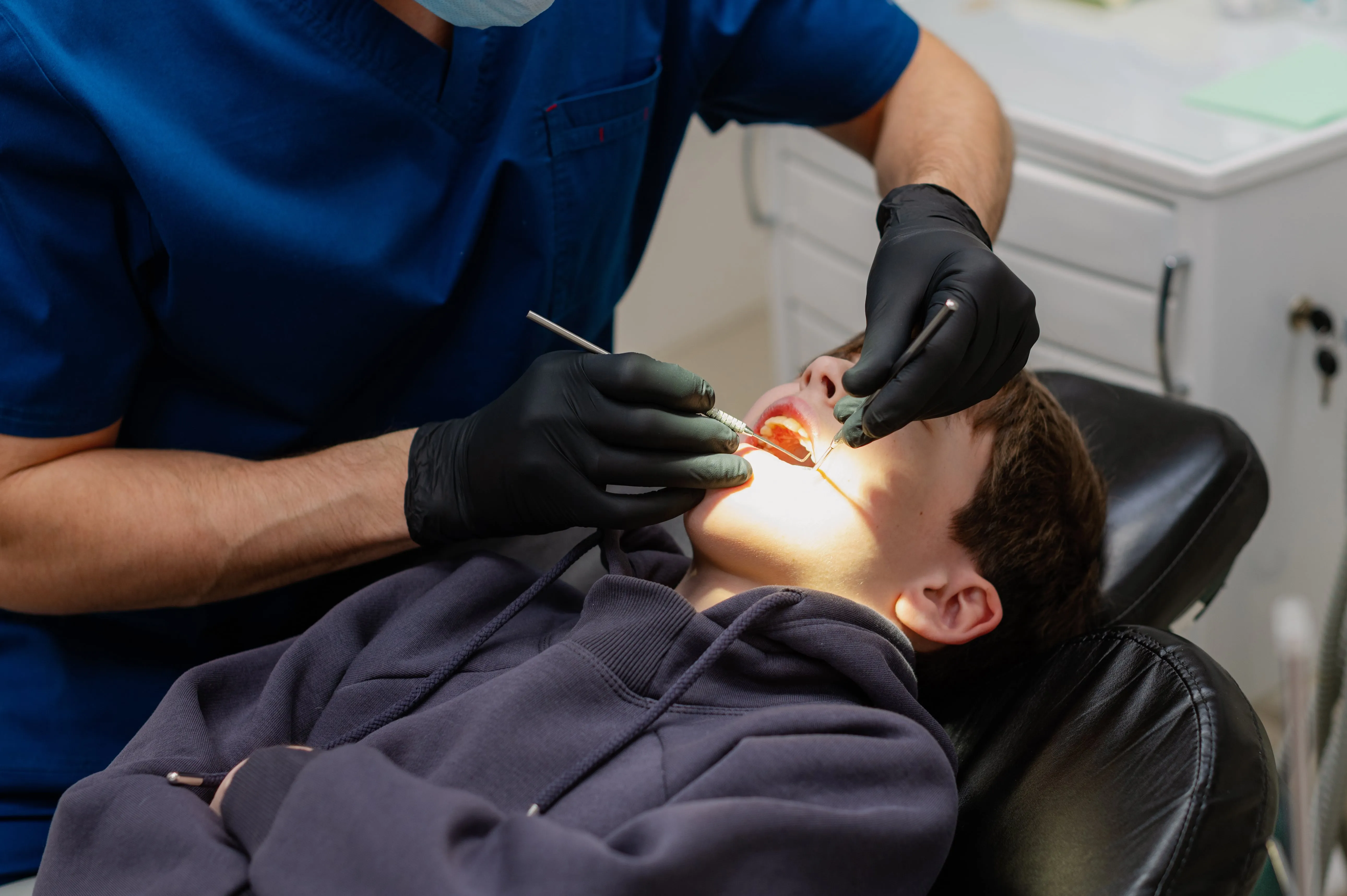
Dr. Hiné will evaluate the affected tooth, surrounding gums, soft tissues, bite, and jaw. The examination is adapted to your child’s age, comfort level, and immediate needs.
3. Dental Imaging
Digital X-rays may be recommended to examine the tooth roots, supporting bone, developing permanent teeth, hidden fractures, or the extent of an infection.
4. Treatment Discussion
Parents receive a clear explanation of:
- The diagnosis
- Recommended treatment
- Potential benefits and limitations
- Reasonable alternatives
- Comfort or sedation options
- Follow-up needs
- Possible effects of delaying care
5. Immediate or Temporary Treatment
Some emergencies can be treated during the first visit. Others may require temporary stabilization followed by a separate appointment for definitive treatment. Complex injuries may require coordination with a medical provider or dental specialist.
Emergency Dental Treatments We May Provide
Chipped Tooth Repair
Treatment for a chipped tooth depends on the depth of the damage and whether the nerve or root is involved. Options may include:
- Smoothing a sharp edge
- Composite bonding
- A tooth-colored filling
- A pediatric dental crown
- Monitoring for delayed symptoms
Our tooth-colored dental fillings for children may be appropriate for selected fractures or areas of lost tooth structure.
No restoration can be guaranteed to look or function exactly like the original tooth, and follow-up may be needed to monitor healing.
Cracked or Fractured Tooth Care
A crack may involve the enamel, dentin, pulp, root, or supporting tissues. Treatment may include a protective restoration, monitoring, or a pediatric dental crown.
If the tooth is too damaged to restore predictably, removal may be considered after reviewing the benefits, risks, and alternatives.
Toothache and Infection Treatment
Emergency treatment for dental pain or infection may involve:
- Removing decay
- Placing a filling or crown
- Relieving pressure or irritation
- Managing an infected tooth
- Extracting a non-restorable tooth
- Referring for medical or specialty care
Our broader pediatric general dentistry services support diagnosis, prevention, and treatment for children’s developing smiles.
Loose or Displaced Tooth Care
Depending on the injury, treatment may include:
- Observation
- Repositioning
- Stabilization
- A soft-food diet
- Follow-up imaging
- Monitoring the tooth’s color, nerve health, and development
Complications may appear days, weeks, or months after an injury, so follow-up is important even when a tooth initially feels better.
Damaged Fillings or Crowns
A lost or broken restoration can leave a tooth sensitive or vulnerable to further damage. Dr. Hiné will evaluate the remaining tooth structure and determine whether the restoration can be repaired, replaced, or temporarily protected.
Tooth Extractions
Extraction may be necessary when a tooth is severely infected, fractured below the gumline, or cannot be predictably restored. NorCal Pediatric Dentistry provides gentle tooth extractions for children when clinically appropriate.
Care for Traumatic Dental Injuries
Children may experience dental trauma from:
- Playground falls
- Bicycle or scooter accidents
- Sports collisions
- Vehicle accidents
- Blunt-force injuries
- Biting hard foods or objects
A traumatic dental evaluation may include the teeth, gums, lips, tongue, jaw, bite, and nearby facial structures. Dr. Hiné may recommend follow-up visits because infection, discoloration, nerve damage, or developmental changes can appear after the initial injury.
Families with children who participate in sports can learn more about athletic dentistry and custom mouthguards. A properly fitted mouthguard may help reduce the severity of certain dental injuries, although no device can prevent every injury.
Sedation and Comfort Options During Emergency Care
Emergency dental visits can be stressful for children and parents. Our team uses calm communication, age-appropriate explanations, and behavior-guidance techniques to help children feel supported.
Depending on the procedure and the child’s needs, comfort options may include:
- Local anesthesia
- Nitrous oxide
- Oral conscious sedation
- Deeper sedation or anesthesia for selected cases
The appropriate option depends on the child’s age, medical history, level of anxiety, ability to cooperate, and treatment complexity. Sedation may not be available during every unscheduled emergency visit.
Parents can review additional information about pediatric sedation dentistry before discussing whether sedation is suitable for their child.
When to Go to an Emergency Room
A dental office can manage many isolated toothaches and dental injuries, but certain symptoms require immediate medical attention.
Call 911 or go to an emergency department if your child has:
- Difficulty breathing or swallowing
- Rapidly increasing facial or neck swelling
- Uncontrolled or heavy bleeding
- Loss of consciousness
- A serious head injury
- A suspected jaw or facial fracture
- Severe facial trauma
- Confusion, repeated vomiting, or unusual drowsiness
- Signs of a serious systemic infection
After your child is medically stable, a pediatric dental follow-up may still be necessary.
Benefits of Child-Centered Emergency Dentistry
Emergency dental treatment in a pediatric setting may provide:
- Evaluation focused on primary and developing permanent teeth
- Communication tailored to a child’s age
- Behavior guidance during a stressful visit
- Parent involvement in treatment decisions
- Comfort and sedation options when appropriate
- Coordination with medical or dental specialists
- Follow-up focused on growth and dental development
NorCal Pediatric Dentistry is a slower-paced pediatric practice. We take time to explain findings, answer questions, and help families make informed decisions without judgment.
Risks and Limitations of Emergency Treatment
Emergency care may relieve pain, stabilize an injury, or control infection, but it does not always complete the full course of treatment.
Potential limitations include:
- The need for a later restorative or surgical appointment
- Delayed symptoms after dental trauma
- Infection or nerve damage that becomes apparent later
- Inability to save a severely damaged tooth
- Changes to a developing permanent tooth
- Sedation that cannot be provided during the initial visit
- The need for specialist or hospital-based treatment
- Healing that varies from one child to another
Dr. Hiné will explain the risks and limitations associated with your child’s specific condition and proposed treatment.
Emergency Treatment or Monitoring
Not every dental injury requires immediate restoration or removal. Some minor injuries may be monitored when the tooth is stable, symptoms are limited, and imaging does not show deeper damage.
Immediate treatment may be recommended when there is:
- Significant pain
- Active infection
- A deep fracture
- Tooth displacement
- Uncontrolled bleeding
- A risk of further damage
- A problem affecting eating or normal function
The recommendation is based on the type of tooth, injury severity, root development, infection, symptoms, medical history, and time since the injury.
Cost of an Emergency Pediatric Dental Visit in Santa Rosa
The cost of emergency dental care varies according to:
- The type of examination
- Necessary dental X-rays
- The treatment provided
- Restorative materials
- Sedation or anesthesia
- Follow-up visits
- Dental insurance benefits
NorCal Pediatric Dentistry accepts many insurance plans. Coverage, deductibles, and reimbursement are determined by the insurance carrier and cannot be guaranteed.
CareCredit and Cherry financing may be available for qualifying families. When possible, our team will explain anticipated costs after evaluating your child and identifying the treatment needed.
Emergency Pediatric Dental Care for Santa Rosa Families
NorCal Pediatric Dentistry is located at 1111 Sonoma Avenue, Suite 102, Santa Rosa, CA 95405.
We care for children and teens from throughout Santa Rosa, including families near Roseland, Llano, and Riccas Corner. Our office also welcomes patients from Rohnert Park, Petaluma, Sonoma, Sebastopol, and surrounding Sonoma County communities.
Families searching for panhandle pediatric dentistry santa rosa may be trying to locate urgent pediatric dental care within a specific Santa Rosa neighborhood or corridor. NorCal Pediatric Dentistry provides treatment from one office on Sonoma Avenue and is not affiliated with a separate practice named Panhandle Pediatric Dentistry.
Why Choose NorCal Pediatric Dentistry?
Families choose NorCal Pediatric Dentistry for emergency care because our approach includes:
- Care from Dr. Adam Hiné, DDS
- Pediatric-focused diagnosis and treatment
- Individualized, unrushed communication
- Same-day appointments when available
- Restorative and surgical treatment options
- Sedation options for appropriate patients
- Support for children with disabilities and special healthcare needs
- Clear guidance for parents and caregivers
- Follow-up after dental trauma
Our philosophy is simple: we treat every child with the consideration and care we would want for our own families.

Frequently Asked Questions
Lorem ipsum dolor sit amet, consectetur adipiscing elit. Suspendisse varius enim in eros elementum tristique. Duis cursus, mi quis viverra ornare, eros dolor interdum nulla, ut commodo diam libero vitae erat. Aenean faucibus nibh et justo cursus id rutrum lorem imperdiet. Nunc ut sem vitae risus tristique posuere.
What should I do if my child knocks out a tooth?
Call our office immediately. For a permanent tooth, hold it by the crown, rinse gently without scrubbing, and keep it moist in milk or an approved preservation solution. Do not reinsert a knocked-out baby tooth. Bring the tooth with you and seek prompt professional evaluation.
How do I know whether my child’s dental problem is an emergency?
Call promptly for significant pain, swelling, bleeding, visible tooth damage, infection, or trauma. Seek emergency medical care for breathing difficulty, rapidly increasing facial swelling, uncontrolled bleeding, serious head injury, or a suspected jaw fracture. Our team can help determine the appropriate next step.
Can you see my child the same day?
NorCal Pediatric Dentistry offers same-day emergency appointments when scheduling and clinical needs permit. Availability cannot be guaranteed. Call before arriving so our team can assess the urgency, provide home-care instructions, and prepare for your child’s visit.
Should my child see a dentist or go to the emergency room?
A pediatric dentist can evaluate most isolated toothaches, broken teeth, and minor dental injuries. Go to an emergency room for difficulty breathing or swallowing, severe facial swelling, uncontrolled bleeding, loss of consciousness, serious head trauma, or a suspected facial or jaw fracture.
How much does an emergency pediatric dental visit cost?
Cost depends on the examination, dental X-rays, treatment, restorative materials, sedation, and follow-up needs. Insurance benefits vary by plan. NorCal Pediatric Dentistry can discuss anticipated fees after evaluating your child, and CareCredit or Cherry financing may be available for qualifying families.
Call an Emergency Pediatric Dentist in Santa Rosa
Call NorCal Pediatric Dentistry at (707) 544-4611 if your child has dental pain, swelling, a broken tooth, or another urgent oral health concern.
Calling first allows our team to assess the situation, offer immediate guidance, and determine the most appropriate next step. Same-day appointments are offered when clinical needs and scheduling permit.